A short break for Oman National Day gave us a chance to see Azerbaijan. This would be our second time in the Caucasus mountains after Georgia in summer this year. The country has opened up for tourism recently. Getting visa, specially for Indians is online and very easy. We were all set to see The Land of Fire, with our eyes set on Khinaliq, a very remote village in southern Caucasus.
After living in India for 38 years of my life, I find getting around in most of the places pretty easy. Azerbaijan was trickier than other countries but still it was not half as chaotic as India. We landed in Baku at 10 pm on Nov 19. The plan was to leave for Quba next evening, from where our Khinaliq guide would pick us. Meanwhile we spent few hours walking old town Baku and a day trip to Gobustan petroglyphs and mud volcanoes. After returning from Gobustan we collected our luggage from our hotel and took an Uber to bus station. The taxi ride turned out to be an exciting conversation. The drunk driver explained how happy he feels when he sees images of India, that there is a place more screwed up than his country. Several years back this comment would have made me angry but now I could see through it. I found it quite humorous. The guy wanted to drive us all the way to Quba for little more than bus fare. A drunk Azeri driver and a car crash wont exactly be funny! So we parted ways.
We hurried to the ticket counters. Here I understood what the taxi guy was pissed about. Intercity bus transport is not very organised in Baku. Big fat guys just pushed themselves ahead of Irina to get tickets. Still i would say it was half as shitty as Delhi. I pushed in with both our rucksacks in my hands and finally we got 2 last seat tickets on this 30 seat bus. Our seats were in the last row. The bus was packed. It was chilling outside but inside it must be 10 degrees warmer. Thanks to the thick woolens that Azeris wear and never take off while travelling. This was like Himachal roadways bus. People from rural Shimla also don’t part with their woolens easily. Their have been positive sightings of Shimla hill people wearing woolen coats in Delhi summers. The journey was quite uneventful except for when our neighbor offered us a shawarma that he bought from a midway stop. The thick smell of meat in the overstuffed bus was suffocating and he put the sarookh right under my nose. I looked at Irina and she looked terrorized. Both of us said “NO” and he pulled it away just in time. Else we might have emptied our stomachs in his lap.
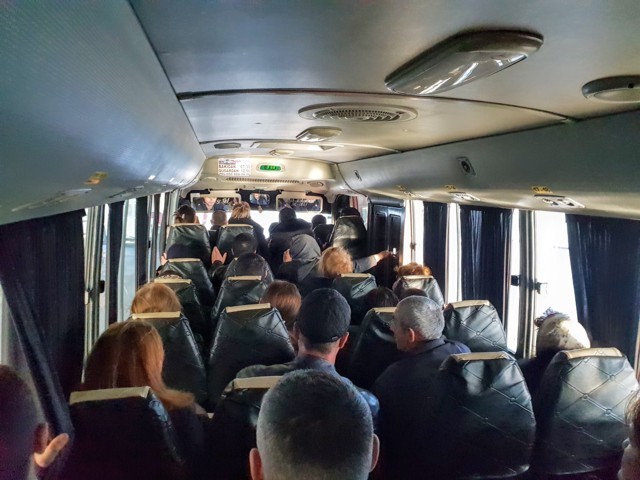
The buses are poor but roads in Azerbaijan are quite good. We covered a distance of 160 km in 2 hours. We reached Quba at 6 PM. It was dark by now. Here another excitement awaited us. Quba is a town of forty thousand. It straddles the river Gudiyalçay from north to south. The northern part is small and houses the only community of Jews in Azerbaijan. Quba region is also famous for its apple plantations which we couldn’t spot in the dark. We knocked on our stay after walking the last 1 km. The guy came out of a smoke filled room which looked like a speakeasy. He said that there is some problem with the room and he offered to ferry us to another accommodation at same cost. Irina was translating it to me. I had never heard of such arrangements on booking.com. We were wary of this situation and told the guy we will manage it on our own. The guy asked us to cancel the booking so he doesn’t pay booking.com. We did it because it didn’t look like a smart idea to argue with a local gangster at this hour. We could always sort it later with booking.com.
We quickly browsed for another place. This time it was double the price of Quba speakeasy. It was called Shahdag Quba hotel and Spa, after the Shahdag mountain in Greater Caucasus range. We walked another 2 km to the new place. Temperature was 9°C and completely dry. The walk was refreshing. At that hour Quba streets reminded me of Kars, a city in Eastern Turkey that we visited in summer 2017. In fact the whole city is strikingly similar to Kars. Grid network of streets, the parks with statues, single story buildings, also a river flowing at the north end. And both settlements bear that rugged industrial character. We checked into Hotel Shahdag and went out for a walk. While walking past we were admiring Haji Jafar mosque from outside. Then an elderly gentleman came out and invited us to see it from inside. The mosque was beautiful from inside. We wandered a while longer on the streets. We returned to our hotel for dinner.
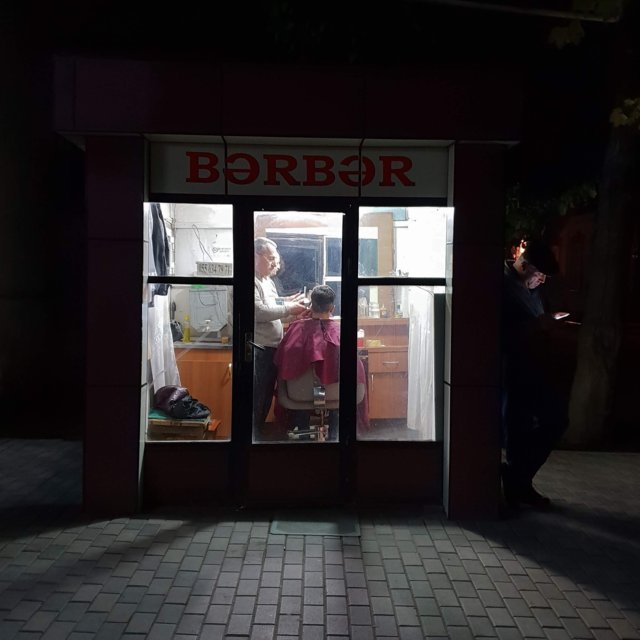
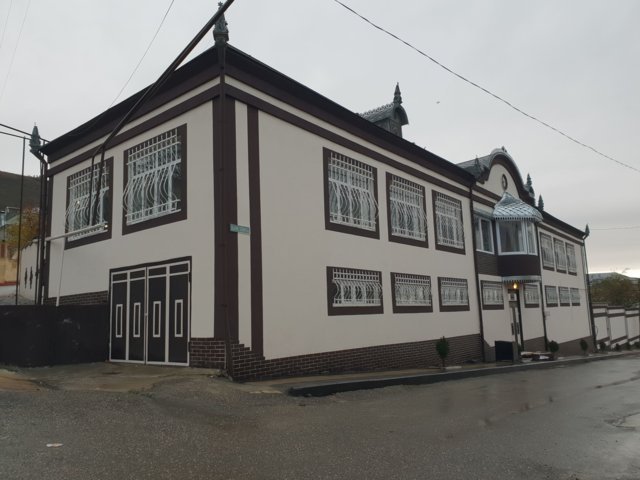
In the morning we walked down to the river and across the bridge to the Jewish settlement. The place was completely different from humble industrial southern side of Quba. The houses here are huge and extravagant. We walked and clicked pictures of artistically built houses and paraphernalia on the outside. The synagogue was wrongly marked on Google. We finally found it by asking a local. It was closed so we could not see it from inside. We returned to our hotel for breakfast.
Kharuddin was punctually there to pick us. We asked to visit the old hamam in Quba before we left for Khinaliq in his blue Lada Niva. The Çuxur Hamam is about 200 year old structure. A lady arrived after we called the number on the door and showed us inside. The structure held well for its age. Luckily It was renovated with help from United States Embassy in March this year.

We bought some supplies for our easy trek in the mountains. Then we started our drive. After a moderate climb through orchards we entered the Gudiyalçay gorge. This part of the road journey was dramatic. The gorge is narrow and involves some tight switchbacks. Once past this area the road descends into a serene broad valley. The Lada drove us up to Qalakudat with ease. The weather was not good. Getting stuck for days in Khinaliq in snow was at the back of our mind. We were checking the forecast every few hours.
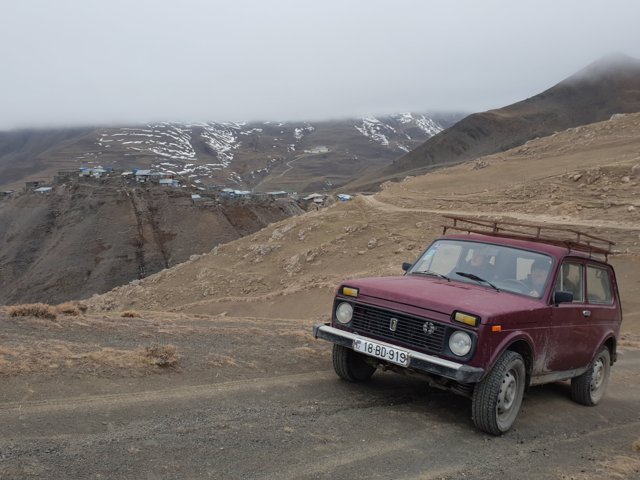
Khairuddin gave us basic directions to reach Khinaliq. The path was easy, the temperature not. Fog blocked the legendary views. We could only see the brown slopes around us and imagine what the scenery would look like without the fog. Khinaliq is named after these brown slopes the color of henna or “khenna”. We came across a herd of sheep which was a welcome anomaly on the freezing trail. Khinaliq is 8 km from Qalakudat via this path. We walked very slowly taking pictures of whatever was visible. Mostly it was of each other. After about 2.5 hours we climbed the last hill. From here we could see the village of Khinaliq few hundred meters away and below. Suddenly at that moment the sky opened to our left for few minutes. We got a glimpse of the snow covered peaks. Soon the fog was back again. Khinaliq is perched on a spur jutting out of the main mountain behind it. It is about 1000 m lower than the snow covered mountain in front of it. We stopped to take in the breathtaking scenery. Another Lada drove past us. 4 men jumped out of it once it reached the top of the hillock. They greeted us and waived. They were looking for something with binoculars. Probably a lost sheep.
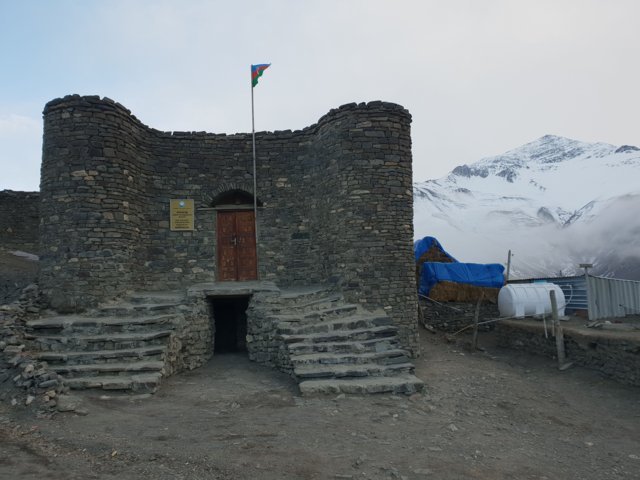
We walked into the village. Here we were greeted by our host Orkhan. Orkhan was in his late 30s, thin and athletic, typical for someone living at this altitude. He led us to the house that was going to be our stay for the night. The fog had parted by now. We could see a large part of the valley. We were greeted by Orkhan’s father Hajiballah standing next to a Lada outside the house. There seemed to be one Lada for every house here. Khairuddin met us on the gate and we decided to visit the Khinaliq museum before it was dark. The museum was maintained by Khairuddin’s family. There were artifacts from around the area put together in one big room. Mostly these were agriculture and household implements showing how life evolved overtime in this tiny remote hamlet.
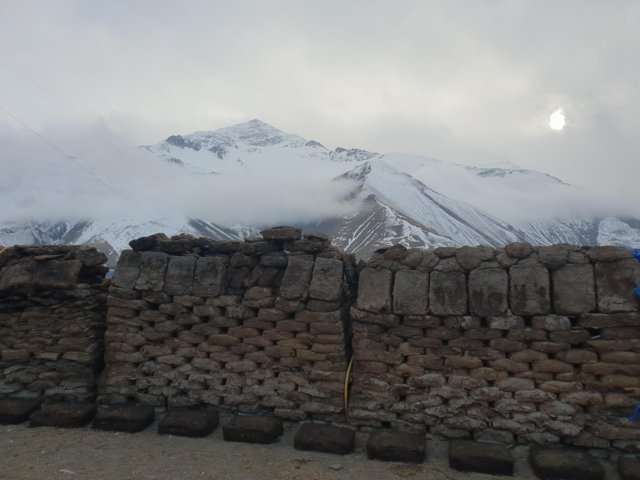
We returned to our hosts house. We entered the house and we were taken to the upper story via the stairs next to the entrance. The room had a dining table with chairs like any modern house. Back in my village in Himachal, we still do not use high dining tables like these. We prefer sitting on the floor to eat. Here maybe they did it for tourists. While in Gorli we get zero tourists. The highlight of the room was the big tandoor stove made of iron sheet. It was kept warm by the dung cakes, the huge collection of which we saw while walking through the village. Life would be impossibly cold without this source of fuel because there are no trees here. The setting was super comfy and warm. We were served black tea. Khairuddin also joined us. Irina’s Turkish was good to make our host smile. With Khairuddin we could have more elaborate conversations. Hajiballah had traveled far and wide under USSR. He worked for government in mineral exploration department and now was retired. His mustache and the Russian hat showed authority.
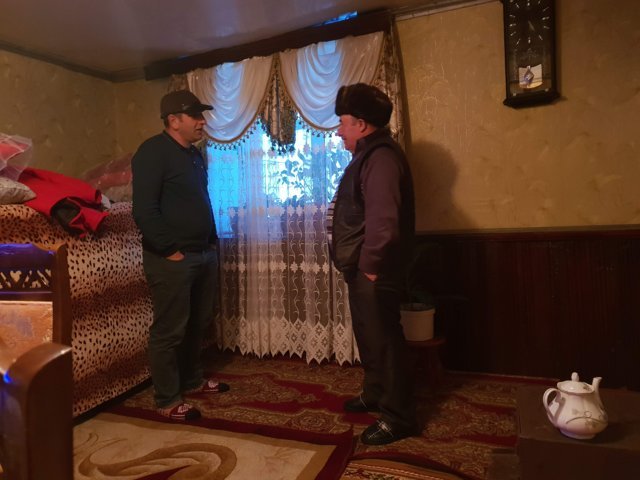
Over tea we talked about Khinaliq and stories around it. Archaeologists strongly believe that the village has been continuously inhabited for 4000 years. The name Khinaliq is given by the outsiders. The people of Khinaliq call their village Ketsh, themselves Kettid, and their language Ketshmits’. The language is completely different than surrounding areas. The remoteness has further helped in protecting it. In fact there are several micro linguistic regions in the valleys around here. Khinaliqi language is being revived. Now it is taught at the local school. It is also written now in Cyrillic script.
There are several mythological stories about Khinaliq. The locals believe that prophet Noah’s ark landed here after the flood. I only hope that it was summer when the ark landed, good for the zebras and giraffes on the boat. Hajiballah invited us to sea his own private collection of old stuff. These were very well preserved and neatly displayed. We returned to the warm room. We were served hot food. The cherries dipped in syrup at the end were excellent dessert. After eating we went out for a walk. The temperature was well below zero. The fog had cleared and we could see the entire valley in the glow of snow on the slopes. We checked forecast and it said 2 cm of snow very early in the morning. Getting stuck here for few days could be real. We had still not seen Baku. It started snowing. Very slow and tiny flakes. We returned to the warm room . Khairuddin was there. He was also worried about weather. We decided that if it continues to snow then we drive down to Quba at night. Irina didnt want to leave the side of stove. The lady of the house put dung cakes into it couple of times. Later Hajiballah showed us our sleeping room for the night. Tired of the altitude walk we dozed off.
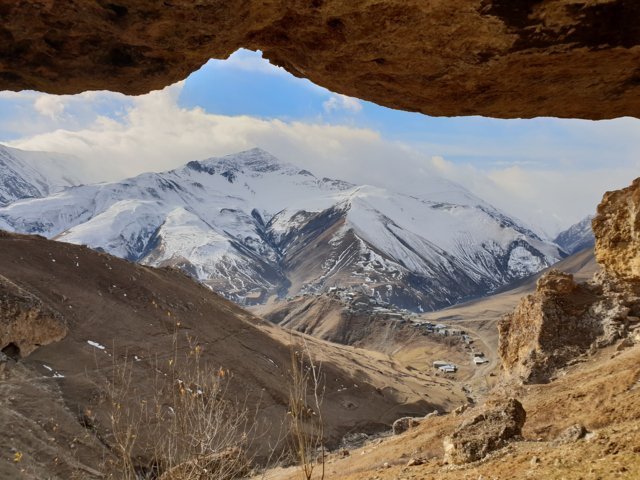
We woke up half expecting a thick snow cover outside. Irina went out first and returned with the good news. Weather had cleared. We were back in the warm room sipping tea with Hajiballah. Khairuddin joined us for breakfast. He told us he didn’t sleep all night. He went out several times to check on the snow. It would have been a different adventure to drive down the icy slopes to Quba at night. And even greater adventure to spend few more days in Khinaliq, probably miss the flight back to Muscat. We had breakfast and then we went on the planned walk. Hajiballah would have lunch ready for us by the time we return. We walked up the path behind the village which goes to the fabled Khinaliq caves. There was a spring coming out of these caves. According to a story there was a time when many women started having still births in Khinaliq. Later they found that it was because of something in the water from one of the springs that caused these deaths. People abandoned this source and started using another one nearby. We walked around for about 3 hours making up for the foggy weather yesterday. It was pleasantly sunny now. The views around were heavenly. Before returning to the village we visited the graveyard above the village. There are eight graveyards in Khinaliq, one of the evidences that this place is being continuously inhabited for a long period of time.
We returned to Hajiballah. We talked some more about the history of the place. They practiced Zoroastrianism here before Islam came to the region. There is an atashgah few kilometers from Khinaliq. They say that the trek is beautiful but needs prior permission because of the army camps in the area and proximity to Russian border. The atashgah has been renovated recently. Despite following Islam now, the locals treat the ancient places with respect. The Food was laid and we enjoyed Hajiballah’s hospitality.
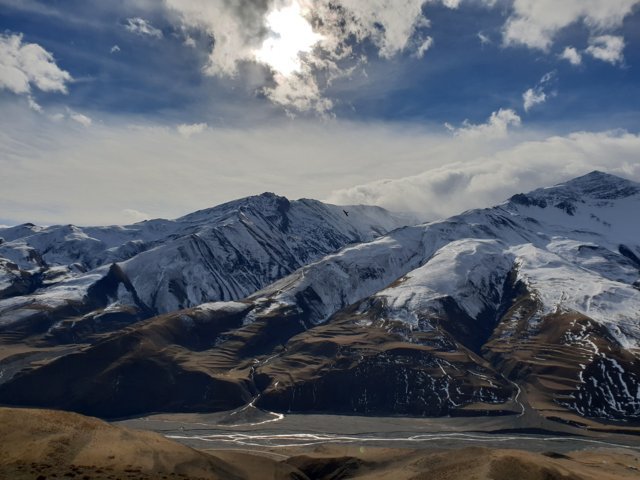
Around 2 pm, it was time to leave. We shook hands with Hajiballah and drove off in the Lada. The road passed under the trek we took on our way here. The glacial landscape looked towering now that we were close to the valley bottom. The brown mountains to our left and higher snow covered ones to our right. Sun had disappeared again but still no fog. We could enjoy the views we missed the previous day. The switchbacks towards the end were covered by frost. This can be extremely dangerous on such tracks because if you brake the car can skid out of control. Only stop then is the bottom of the gorge. Khairudding engaged 4×4 low gear on the Lada and descended carefully avoiding using brakes. Soon we were out of the steep switchbacks.
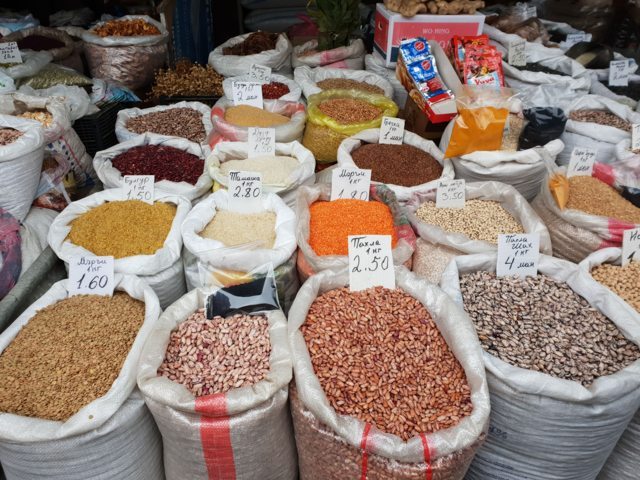
As promised Khairuddin took us for a tour of vegetable market in Quba. It was raining now. The veggies and fruits were of very good quality. we bought some nuts and dried pears which we wont find in Muscat. The market was not fancy but it was neat. A group of ladies selling their produce starting dancing on a catchy tune when we passed by. They invited us to join. Irina jumped in to dance and the ladies burst out laughing. A thought passed by my mind about Chandigarh fruit market and the sort of chaos and dirt that prevails there on rainy days. That chaos is deliberate. The chaos keeps the poor busy while the powerful can prey on them.
Khairuddin dropped us to the bus stop. There was a minibus waiting to depart. Last 2 seats and we boarded. While Irina got a proper seat, I was sitting between the driver and another passenger about 2 feet from the windshield. This discomfort was a very small price to pay to visit Khinaliq, one of the highest and oldest villages in Europe.

 wanderIngY